
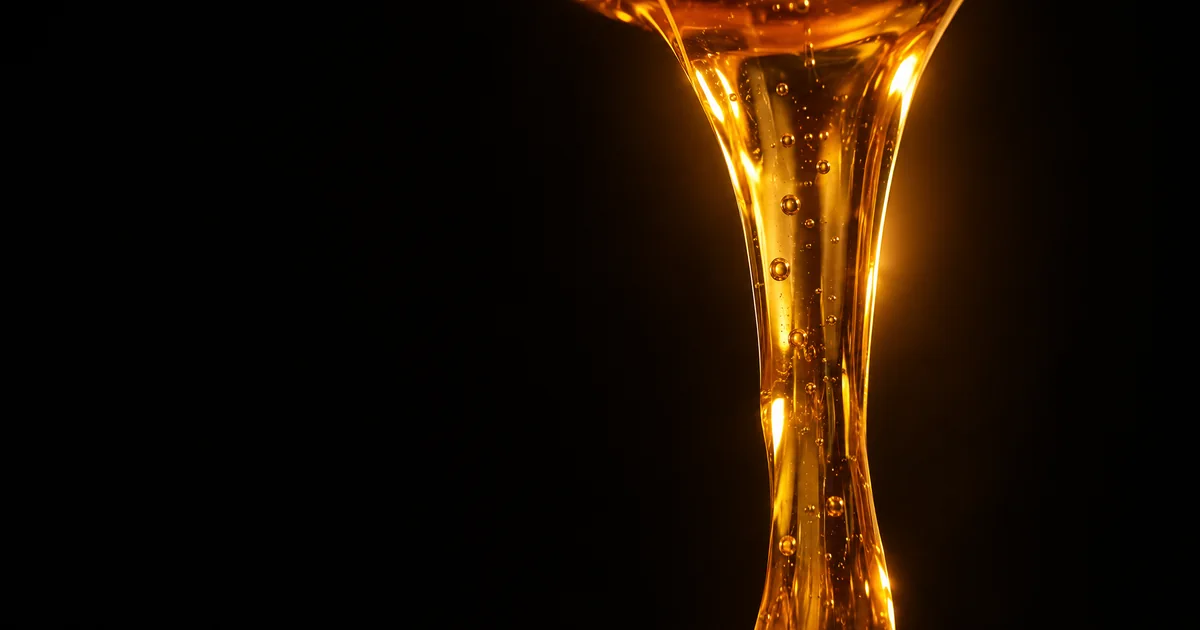

Honey has been part of the human diet for thousands of years. But what does a honey stick really contain, how many calories does it provide, and how can you eat it sensibly? Here are the answers, backed by official figures.
What exactly is honey?
European regulations define honey as the natural sweet substance produced by bees from the nectar of flowers or from plant secretions, which they transform, dehydrate and leave to mature in the combs of the hive. Nothing may be added to it: honey contains no added sugar, no preservatives and no flavorings.
Its color, taste and texture vary with the flowers the bees forage on, the region and the season: acacia honey stays light and runny, while chestnut honey is darker and stronger-tasting.
What 100 g of honey contains
According to the Ciqual food composition table published by the French agency Anses, honey consists on average of:
- about 82% carbohydrates, mainly fructose (around 41 g per 100 g) and glucose (around 36 g);
- about 17% water;
- traces of minerals, organic acids, enzymes and aromatic compounds from the flowers;
- virtually no fat or protein.
Its energy content is about 304 kcal per 100 g.
And in a 10 g stick?
A 10 g honey stick therefore provides about 30 kcal and just over 8 g of sugars, the equivalent of a little less than two sugar cubes. It is a useful benchmark for fitting honey into a balanced diet.
Honey or white sugar?
White sugar is pure sucrose. Honey contains fructose and glucose, water and compounds from the flowers. Because of its fructose, its sweetening power is slightly higher, so people often use a little less of it for the same sweetness.
It is still a sugar, though. The World Health Organization recommends limiting free sugars, which include honey, to less than 10% of daily energy intake. Honey is meant to be savored, not eaten without limits.
Why so many men choose honey
- Taste: a natural product, rich in aromas, far from industrial flavors.
- Simplicity: a basic, unrefined food, with no long list of ingredients.
- Tradition: all over the world, honey is associated with everyday energy and shared moments.
- Format: in an individual stick, it slips into a pocket, is eaten as is and stays perfectly portioned.
In all honesty: in Europe, no health claim is authorized for honey. Be wary of websites that attribute medical effects or performance promises to it.
The honey stick, a format designed for an active life
The individual stick has several practical advantages: you know the exact amount, the packaging is hygienic, no spoon is needed and it goes anywhere, to the office, on a trip or to the gym. It is the format of the products in the Miel Empire collection. To choose the one that suits you, see our guide Which honey should you choose?
Tips for eating and storing honey
- Never before age 1: honey is not recommended for infants under 12 months because of the risk of infant botulism.
- Diabetes: honey raises blood sugar like other sugars. Ask your doctor for advice.
- Storage: keep away from heat, light and moisture, ideally between 15 and 20 °C.
- Crystallization: honey that hardens or turns white has not gone bad. It is a natural process linked to its glucose content.
Frequently asked questions
How many calories are in a 10 g honey stick?
About 30 kcal, with just over 8 g of sugars, based on the average values in the Ciqual table.
Is honey better than sugar?
It provides aromas and a few compounds that white sugar lacks, and people often use a little less of it. It is still a sugar, to be eaten in moderation.
Why has my honey hardened?
That is crystallization, a natural process. The honey is still perfectly fine to eat.
Sources
- Anses, table de composition nutritionnelle des aliments Ciqual
- Directive 2001/110/CE relative au miel
- World Health Organization, recommendation on sugars
This article is for information only. It does not constitute personalized medical or nutritional advice.